

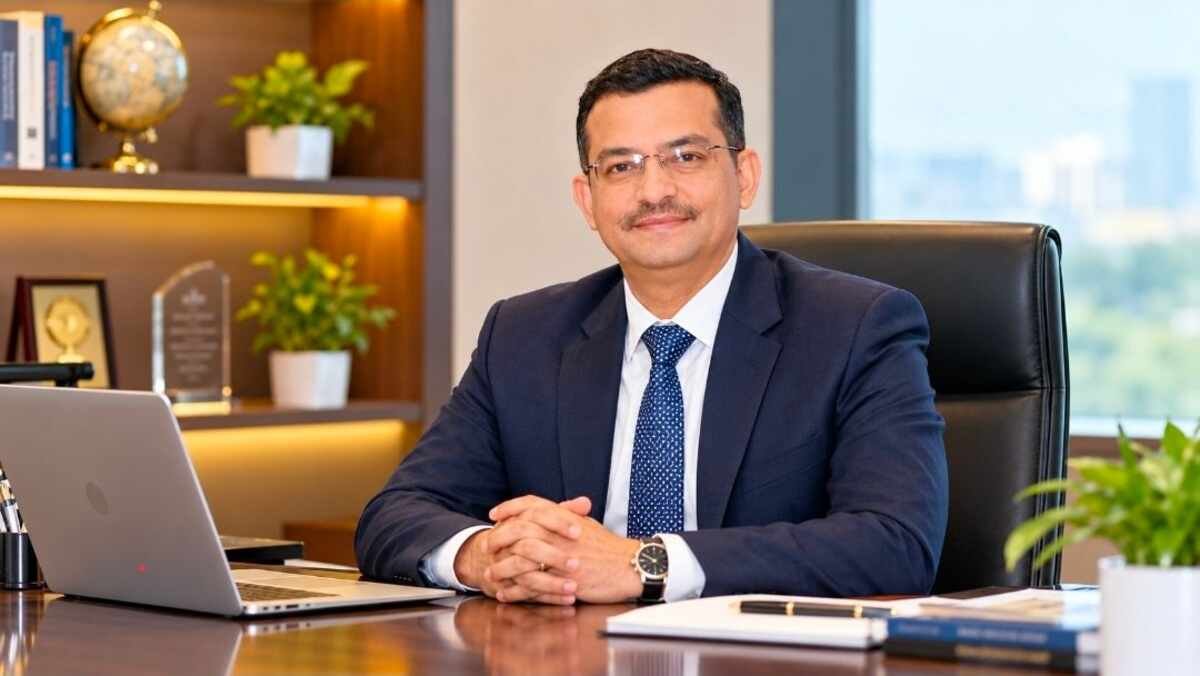
Dr. Amit Ravindra Patil has been awarded a Doctor of Philosophy (PhD) from Indian Management School & Research Centre for his research titled “Building a Comprehensive Safety Culture Framework for Indian Industries: Multi-Sector Assessment and Model Development”.
The pursuit of workplace safety has evolved significantly over the past two decades. While traditional safety management systems focused heavily on compliance, procedures, and incident prevention, modern organizations increasingly recognize that sustainable safety performance is shaped by deeper organizational factors, including leadership commitment, workforce engagement, organizational learning, and culture. This evolution is reflected in the academic contributions of Dr. Amit Ravindra Patil, whose doctoral research journey progressed from Behaviour-Based Safety (BBS) in 2011 to the development of a comprehensive Safety Culture Framework for Indian industries in 2026.
Behaviour-Based Safety emerged as a prominent approach during the late twentieth and early twenty-first centuries, emphasizing the role of human behaviour in workplace incidents. The philosophy was straightforward: by observing behaviours, identifying unsafe actions, reinforcing positive practices, and providing constructive feedback, organizations could significantly reduce accident rates. The approach represented a major advancement over traditional fault-finding methods by focusing on proactive intervention and employee involvement. In many organizations, BBS contributed to improved awareness, greater individual accountability, and enhanced participation in workplace safety programmes. Dr. Amit Ravindra Patil’s earlier doctoral research explored these principles and reinforced the importance of understanding behavioural science and industrial psychology as fundamental elements of accident prevention and risk reduction.
However, experience gained across multiple industries and geographies demonstrated that behaviour alone could not fully explain organizational safety performance. Employees do not operate independently of their environment. Their decisions and actions are influenced by leadership priorities, communication effectiveness, management systems, organizational values, operational pressures, and workplace norms. Organizations with similar procedures and regulatory requirements often demonstrated vastly different safety outcomes, suggesting that the underlying culture played a far more significant role than previously understood. This recognition prompted a shift in thinking from managing behaviour as an isolated element to understanding safety as an organizational capability embedded within culture.
This broader perspective became the foundation of Dr. Amit Ravindra Patil’s 2026 doctoral research, documented in Phd Thesis – Safety Culture in Indian Industry – Dr Amit Patil. The study addressed an important gap in both academic literature and industrial practice. While numerous safety culture models have been developed globally, many originate from specific national, industrial, or regulatory contexts and may not adequately reflect the realities of Indian industry. India’s industrial landscape is characterized by significant diversity in organizational maturity, workforce demographics, leadership styles, operational complexity, and sector-specific challenges. Consequently, the need existed for a framework capable of providing a common safety culture architecture while remaining flexible enough to accommodate varying industrial contexts.
The research adopted a mixed-method approach involving 213 respondents from the manufacturing, services, healthcare, construction, and oil and gas sectors. The multi-sector design allowed the study to identify both common cultural characteristics and contextual differences across industries. Rather than focusing solely on safety performance indicators or employee perceptions, the research examined the broader organizational factors that influence safety culture development and sustainability. The findings demonstrated that despite differences in operational environments, certain cultural dimensions consistently influenced safety performance across sectors.
One of the most significant contributions of the research is the development of an India-specific Safety Culture Framework built around six interconnected dimensions. The framework recognizes that safety performance is not the result of a single intervention, programme, or management system. Instead, it emerges from the interaction of leadership responsibility, employee involvement, safety perception, operational practices, team-level influences, and organizational learning. By integrating these dimensions into a unified structure, the framework provides a practical mechanism for understanding how safety culture develops and how organizations can systematically strengthen it over time.
A further contribution is the introduction of a maturity-based implementation model. The study acknowledges that organizations operate at different stages of cultural development and cannot be expected to achieve similar outcomes through identical interventions. The proposed model enables organizations to assess their current maturity, identify priority areas for improvement, and implement actions appropriate to their specific stage of development. This approach transforms safety culture from an abstract concept into a practical management tool capable of supporting continuous improvement and long-term organizational learning.
Importantly, the research addresses a common limitation found in many safety culture studies: the gap between measurement and implementation. While numerous assessment tools exist to evaluate safety culture, relatively few provide a structured pathway for translating findings into practical improvement actions. The proposed framework bridges this gap by connecting diagnosis with governance, leadership actions, workforce participation, learning mechanisms, and performance monitoring. As a result, organizations are provided not only with a means of assessing culture but also with a roadmap for strengthening it.
The progression from Behaviour-Based Safety to Safety Culture should not be viewed as a replacement of one philosophy by another. Rather, it reflects a natural evolution in safety management thinking. Behaviour remains a critical determinant of workplace safety because organizational outcomes are ultimately influenced by human actions and decisions. However, behaviour is shaped by the broader organizational environment. Safety culture provides the conditions that encourage, reinforce, and sustain safe behaviours over time. Consequently, Behaviour-Based Safety can be viewed as an important tactical element within a larger strategic framework of safety culture development.
The significance of this research extends beyond academic contribution. As Indian industries continue to expand, modernize, and integrate with global markets, organizations increasingly require approaches that move beyond regulatory compliance towards cultural excellence. The proposed framework provides a structured and evidence-based model through which organizations can evaluate their current state, prioritize interventions, strengthen leadership accountability, enhance employee engagement, and build resilient safety systems capable of sustaining long-term performance.
The journey from Behaviour-Based Safety research in 2011 to the development of a comprehensive Safety Culture Framework in 2026 reflects the broader transformation occurring across the safety profession. It demonstrates that while behaviour remains important, sustainable safety excellence is achieved when leadership, systems, learning, participation, and culture operate in alignment. By providing an India-specific framework grounded in multi-sector evidence, Dr. Amit Ravindra Patil’s research offers both academics and practitioners a practical pathway towards building safer, more resilient, and higher-performing organizations in an increasingly complex industrial environment.
The Indian Management School & Research Centre (IMSR) supports the pursuit of knowledge, research, and professional development through its academic initiatives. The achievement of Dr. Amit Ravindra Patil highlights the importance of research in addressing real-world challenges and contributing to professional practice. His journey serves as an encouraging example for experienced professionals who wish to explore research, deepen their understanding of their respective fields, and contribute meaningfully to the advancement of knowledge.
For more information, visit www.imsrindia.com.