

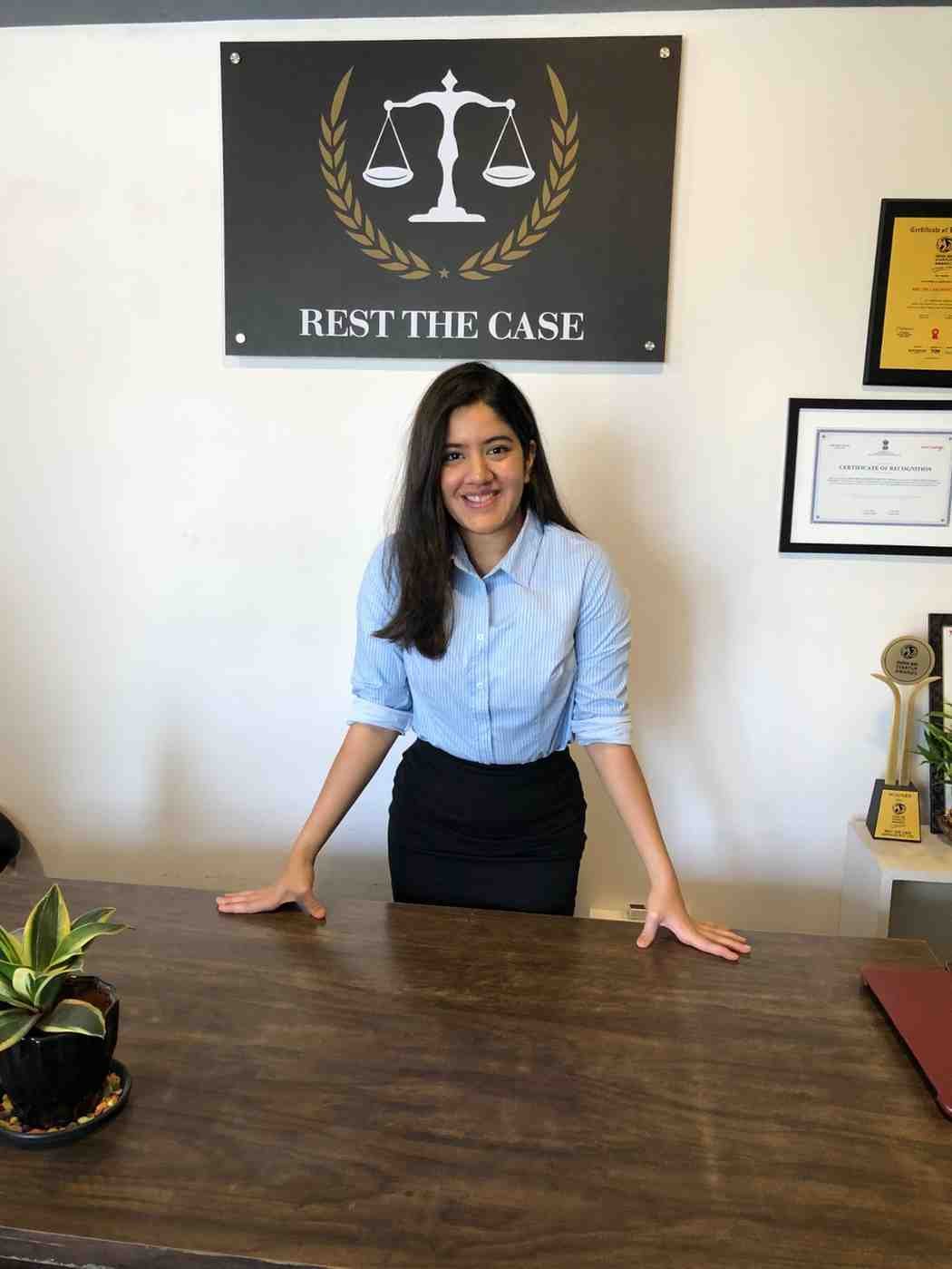
You started your entrepreneurial journey at a very young age. What inspired you to create Rest The Case, and how did the idea first come to you?
The idea came from a real interaction that stayed with me. I once met a woman in her fifties who was dealing with a property dispute but had no idea where to begin, no clarity on which lawyer to approach or what the legal process looked like.
That moment made me realise how intimidating the legal system can feel for ordinary people. Later, during my time studying abroad, I noticed how easily people could find legal information online in countries like the UK. When I searched for something similar in India, I realised there was a clear gap.
That’s when the idea for Rest The Case was born to simplify legal access and help people find the right legal guidance without confusion or fear.
As a young woman entrepreneur in the legal-tech space, what were some of the biggest challenges you faced while building your platform?
One of the biggest challenges was credibility.
I started the company at 21, and the legal industry is traditionally very conservative. Many lawyers initially assumed it was just a college project.
I had to personally visit law offices, explain my vision repeatedly, and build trust step by step. Those early conversations were not always easy, but they helped me understand the industry deeply.
Once the first few lawyers joined the platform and started seeing results, things gradually changed. Today we have lawyers from over 200 cities on the platform, and that journey has been incredibly rewarding.
Rest The Case aims to make legal services accessible to everyone. How do you think technology is transforming the legal industry in India?
Technology is playing a huge role in making the legal system more transparent and accessible. Earlier, finding the right lawyer or understanding legal procedures could be very time-consuming and confusing.
At Rest The Case, we are constantly exploring how technology can simplify legal work and improve access to information.
Recently, we launched LiA – India’s first Legal Intelligent Assistant, trained specifically on Indian law. It helps lawyers draft documents, generate legal drafts, calculate timelines, and create citations more efficiently.
Our aim is to use AI to support lawyers in their daily work while making legal processes faster and more organised. We also offer a free trial version so legal professionals can experience how technology can improve their workflow.
You studied at institutions like Harvard University and Cardiff University. How did your international education shape your vision as an entrepreneur?
Studying abroad gave me a broader perspective on how technology can simplify complex systems.
At Cardiff University, I worked on projects that involved interviewing lawyers and studying legal platforms in the UK. I saw how easily people could access verified legal information online. That exposure helped me recognise the gap that existed in India.
Programs like Harvard also encouraged me to think beyond traditional career paths and look at law through the lens of innovation and entrepreneurship.
Starting a company at the age of 21 is a big achievement. What advice would you give to young women who want to start their own ventures?
My advice would be simple, start with a real problem.
Don’t build a business just for the sake of entrepreneurship. Identify something that genuinely needs solving and focus on creating value.
Also, don’t let your age or background limit you. People may doubt you in the beginning, but consistency and persistence speak louder than anything else.
You have received the India 5000 Women Achiever Award 2021. What does this recognition mean to you, especially in the context of Women’s Day?
Receiving the India 5000 Women Achiever Award was a very special moment for me. When you start young and face scepticism early on, recognition like this reassures you that your work is making an impact.
For me, the award is not just a personal milestone, it reflects the importance of the problem we’re trying to solve. If our work can make legal awareness more accessible for people, then that recognition feels even more meaningful.
On the occasion of International Women’s Day, what message would you like to share with young women who aspire to create their own identity in the professional world?
I would say: believe in your ideas, even if they feel unconventional.
You don’t need to have everything figured out before you start. The most important step is taking the first one.
Focus on learning, solving problems, and building something meaningful. Over time, your work will create its own identity.